Culture / Explainer
Why the Seine is an architectural timeline, not just a view
The riverfront’s World Heritage listing connects monuments through urban space and successive eras.
News Today Paris Editorial· AI-assisted explainer · Editorial standards
Saved stories stay on this browser. No account required.
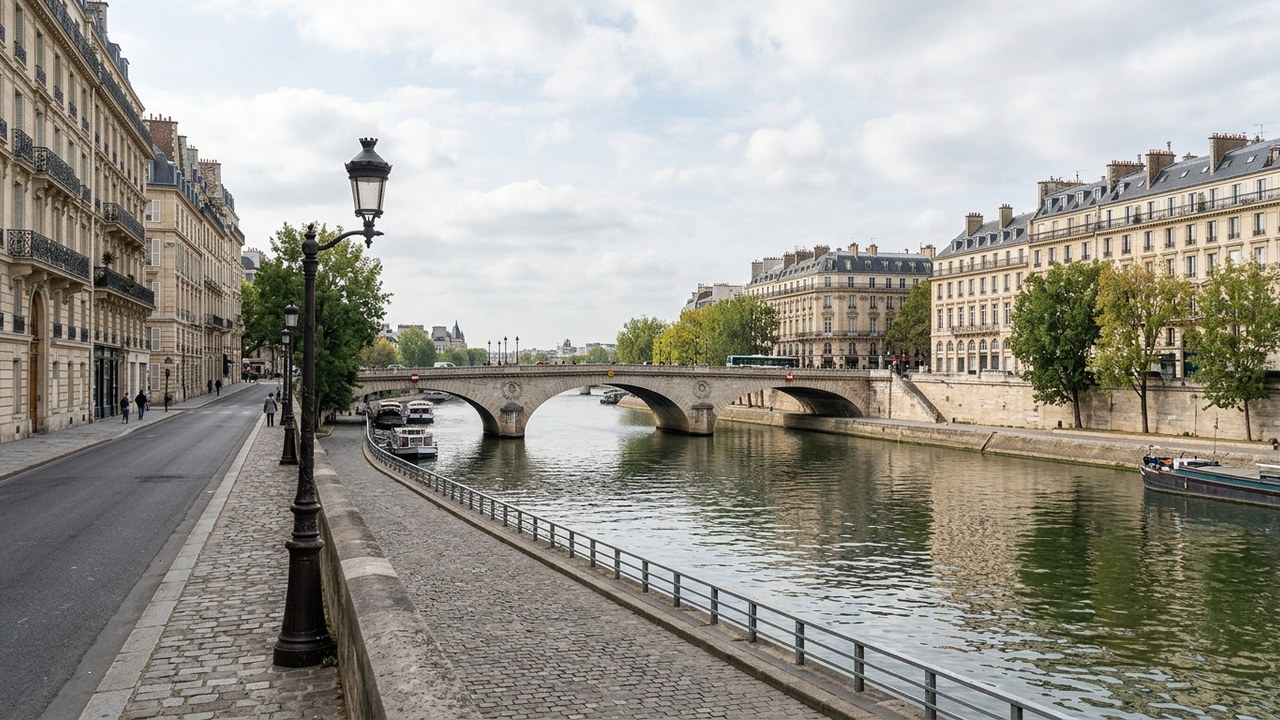
A photograph along the Seine often isolates a single monument. UNESCO’s listing of Paris’s riverbanks invites the opposite approach: read the buildings, bridges, open spaces and views as an ensemble. The cultural significance lies partly in their relationships, not only in the individual landmarks that make familiar silhouettes.
The listing connects sites such as Notre-Dame, Sainte-Chapelle, the Louvre and Place de la Concorde across a history extending from the Middle Ages into the twentieth century. Its description also points to the influence of Haussmann’s broad squares and avenues on later town planning. The riverfront therefore offers several kinds of urban history within one landscape.
One way to look more closely is to compare how a building meets public space. Does it face an open square, a riverbank or a narrower approach? Where does the view encourage you to stop, and where does it pull the eye onward? These are observational questions rather than claims that every feature belongs to a single coordinated design.
Chronology matters as well. A coherent view can bring together elements made in different periods. Instead of calling the whole scene simply old Paris, identify the particular building and its documented history. UNESCO’s account is useful precisely because it presents the riverside as an accumulation of architectural and planning achievements, not a city preserved at one moment.
The World Heritage label is also not a ticket or access promise. It describes recognized cultural value and a defined property. For a visit, the individual institution remains the source for opening arrangements. For interpretation, the listing provides a different tool: a reason to look between the famous monuments, where the shape of the city helps explain why those monuments belong together.
Sources & further reading
Consult the original sources for definitions and updates. Source links do not imply endorsement of this publication.
Notice an error? Suggest a correction. Read our editorial standards.